
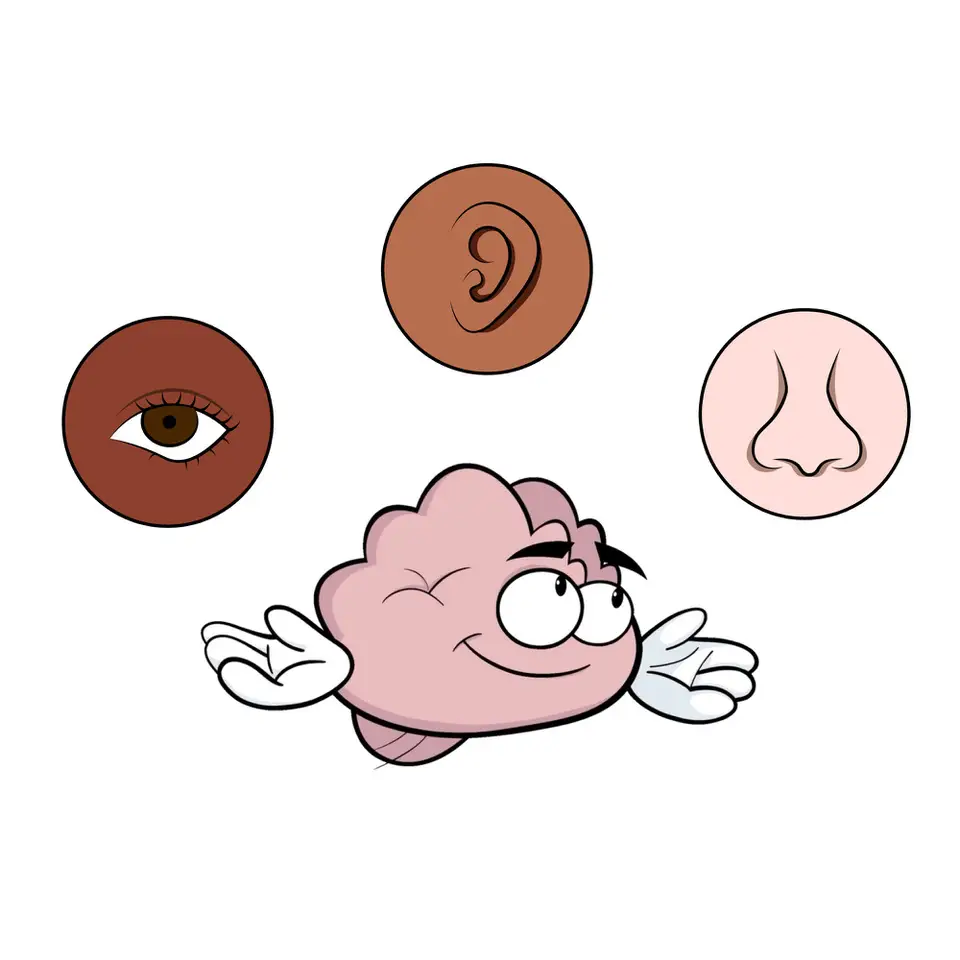
Sensory processing is about how your brain understands things you see, hear, smell, taste, touch, or feel in your body.
Sometimes, we can feel overwhelmed by these things, like loud noises or itchy clothes. This can make it hard to stay calm or focus. For teenagers and young adults, these challenges can be harder to manage because of all the change that is going on in their lives.
Common Sensory Challenges
Sensory processing differences can make you very ‘sensitive’ to noise, lights, or certain fabrics. Or instead you may seek very strong sensations such as strong flavours, weighted blankets, or moving constantly. You may experience both extremes and sometimes find we are very sensitive to certain sensations and at other times seek them out. In general, when our senses are overwhelmed or underwhelmed, we can feel anxious or overwhelmed. This can make it harder to join in with friends or group activities whilst we are trying to regulate our senses.
Common sensory processing differences include:
- Finding everyday sounds too loud or even not noticing them at all.
- Feeling uncomfortable when touched or needing deep pressure to feel relaxed.
- You might find you grip your pen very hard or press very hard when typing and find your hands ache.
- Feel dizzy or have trouble keeping your balance.
- Be very sensitive to different tastes or smells, or seek out very strong tastes and smells.